Long Beach Boulevard Kept Its Old Fire Station by Letting the Inside Change
November 12, 2026
In the summer of 2024, Catherine Tolentino stood in the garage of the old Fire Station 9 at 3917 Long Beach Blvd., in the bay where fire trucks used to park. "It does feel like a new era for Gemmae," she told Longbeachize. Her family had just closed escrow on the building, and the plan was to make it the second location of their West Long Beach bakery.
Farther north on the same boulevard, at 4101 Long Beach Blvd., the City opened the new Fire Station 9 last month. Those two addresses, on the stretch where Bixby Knolls meets Los Cerritos, tell one story about a single 2019 closure. The City spent more than $31 million to replace the station. It kept the 1939 building because the landmark rules it adopted protected the outside and allowed the inside to change.
The old station closed in 2019 after repeated leaks led to mold. In August 2019, the Long Beach Post reported that crews first found mold in December 2017 and that it came back in June 2019. When the Press-Telegram covered the new station's opening, it also listed asbestos among the old building's problems. Station 9's firefighters moved to a temporary facility near Long Beach Airport.
The City then had an empty, damaged building to sell. It declared the station surplus land in October 2022, received no bids, and turned to a broker the following May, according to the Long Beach Post.
In January 2024, before any sale, the City Council decided how much of the building had to stay. The Signal Tribune reported that the Council designated the station a historic landmark. Exterior preservation was required. Interior preservation was made conditional so the building could be adapted, provided historic features were photographed in advance and salvaged when removed. Longbeachize reported that some residents had called for preserving the whole building, but the City concluded that leaving room to change the interior would make it easier to sell.
Within weeks, the property had a buyer. The Tolentino family offered $750,000, even though the City had listed the station at $445,000, the Long Beach Post reported. Escrow closed on July 31, 2024.
The building is older than most of the houses around it. Long Beach Heritage dates its construction to 1938 and its opening to May 15, 1939, and credits it to architect William Horace Austin in the Tudor Revival style. Under the landmark rules, that exterior stays.
Inside, the Tolentinos were rebuilding a firehouse to work as a production bakery. They started out without knowing which walls were load-bearing or where the ovens could go. By Longbeachize's June 4, 2026 update, the buildout included these changes:
The last two items on that list are the kind of interior features the conditional preservation rules were written to deal with. The City's flexibility allowed for a commercial kitchen, and the family has kept the rooms visitors will notice first.
In 2019, officials told the Long Beach Post that no money had been identified for a replacement. They estimated a permanent station would take two to three years to build. It took seven years from the closure to the opening. The City's project page gives this construction sequence:
The City attributes the late delays to supply problems. Procurement of the curtain wall and exterior windows pushed the schedule back, and then the custom perimeter fence panels took longer to arrive than expected.
The funding came from three sources: $8,861,510 in Measure A funds, $22,000,000 in Measure A bonds and $512,156 from the General Capital Fund. That totals about $31.4 million for the new building, compared with the $750,000 the City received for the old one. The difference reflects that the City was building a modern 12,779-square-foot, two-story station while the buyer took on a 1938 building with mold history and a landmark designation.
At the ceremony, Chief Dennis Buchanan told the Press-Telegram that "this facility is really a good investment to the people who respond on those calls every day." The station houses a fire engine, a rescue engine, a battalion chief and eight firefighters, and it serves Bixby Knolls and North Long Beach.
Most of what neighbors will see from the new station is outside the fence. The City's project page lists off-site work that changes how this block works on foot and by car:
| Location | What changed |
|---|---|
| Long Beach Blvd. at E. Randolph Place | New traffic signals |
| Alley on the station's north side | New pavement, widened by two and a half feet |
| E. Randolph Place, south side of the site | New concrete pavement |
| Long Beach Blvd. and E. Randolph Place frontage | Upgraded sidewalks and landscaping |
| Long Beach Blvd. at the station | Power lines placed underground |
The new signal at Randolph Place is the change most people will notice. Anyone driving the boulevard, walking down from the side streets or cutting through that alley now passes a different intersection from the one there before construction began.
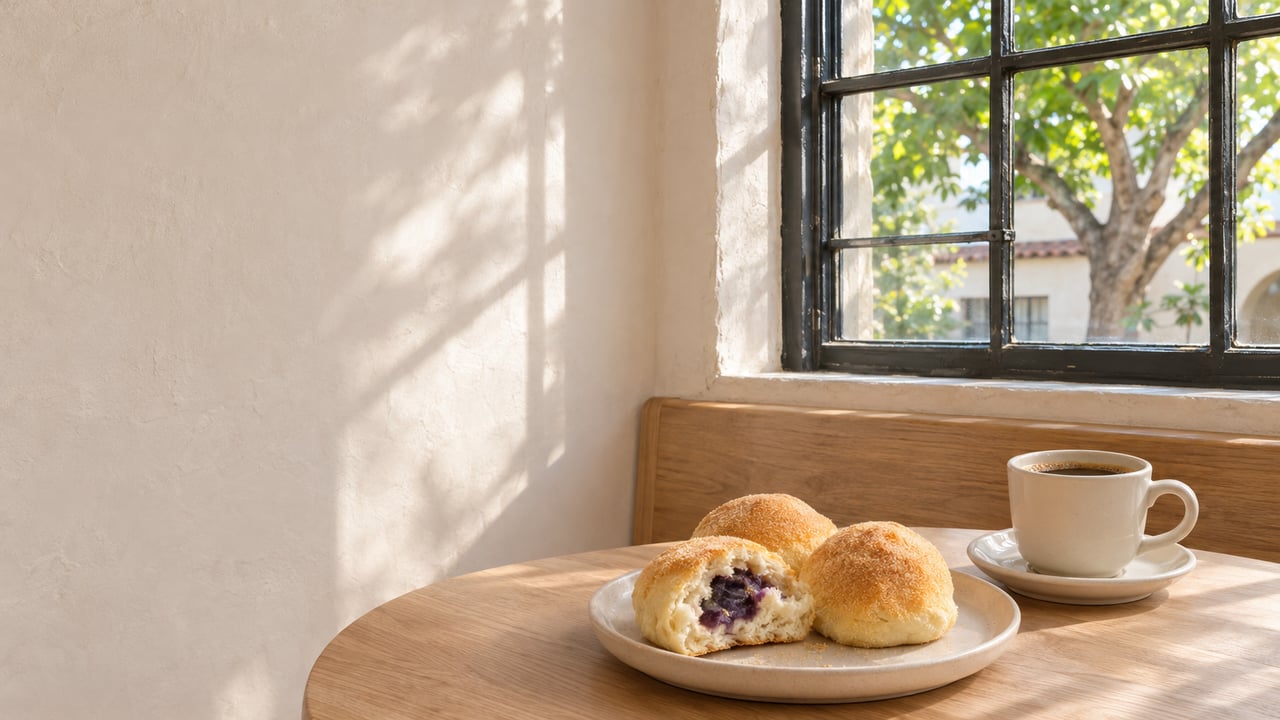
Gemmae has a long history behind it. Prescilla Tolentino started the bakery in the Philippines in 1979. In 1993 she opened the family's first U.S. shop at the southwest corner of Willow Street and Easy Avenue in West Long Beach, according to Longbeachize's 30th-anniversary profile. The shop is known for ube loaves, ensaymadas, pandesal and mamons, along with prepared foods such as lumpia, pancit, lechon kawali and sisig. Catherine, Prescilla's daughter and co-owner, is leading the Long Beach Boulevard location.
The original shop at 1356 W. Willow St. is open Monday through Saturday from 6:30 a.m. to 5 p.m. and Sunday from 6:30 a.m. to 4 p.m., according to Gemmae's contact page. That is the place to go now for the ube loaf you will eventually be able to buy at the old firehouse.
The new station is one project in the City's Elevate '28 infrastructure plan, which also covers two street projects near this stretch of the boulevard.
The Del Amo Boulevard Complete Street Project covers Del Amo from Long Beach Boulevard to Atlantic Avenue and from Orange Avenue to Cherry Avenue. The section in between was finished in 2022. The City's schedule lists construction from fall 2026 through summer 2027. The design adds physically separated bikeways and permanently removes the outermost third vehicle lane in each direction. At listed intersections, new bulb-outs will take out about 10 to 20 feet of curb parking, and the City says parking next to homes and businesses will not be affected. Like Station 9, the project draws partly on Measure A bonds.
On Orange Avenue, the City awarded the next phase of the Orange Avenue Backbone Bikeway to Excel Paving Company on June 9, 2026. The City lists a construction start of late 2026. The phase includes Orange from Wardlow Road to 52nd Street. LAist reported the scope as 2.66 miles of upgraded bike lanes, five protected intersections, 10 upgraded crosswalks with flashing beacons, 15 new or relocated bus stops and 2.5 miles of sidewalk work, with completion forecast for fall 2028.
The Fire Station 9 schedule moved because of curtain walls, windows and fence panels. The City's Del Amo page includes a similar caveat, saying its timeline holds "barring weather delays and other unforeseen circumstances."
Thinking about reusing an older building with historic rules around it, whether it is a 1930s house in Bixby Knolls or a garage you want to convert? Perry Handy Homes handles the permits, the contractors and the sale under one roof, with a licensed broker and general contractor overseeing the work. Schedule your free home valuation and renovation consultation, and we'll map out the permit and design review steps before any work starts. Questions about how a rule applies to your property's legal situation should go to a land-use attorney.
Stay up to date on the latest real estate trends.
Whether you're selling, buying, or renovating, Perry Handy Homes brings the expertise, resources, and care to help you succeed—start to finish.