How to Read a Bixby Knolls House by the Year It Was Built
November 19, 2026
On March 9, 1930, a stunt jumper billed as the "Ace of Sky Jumpers," Harold Whitby, jumped off a plane's wing at 3,000 feet over a former lima bean farm in north Long Beach. The Bixby family had been calling the farm the Bean Ranch. That day was the opening of Bixby Knolls, and the first ad promised buyers, "Your New Home Can be so Distinctive in Design that Passers-by will Stop to Admire." Lots started at $2,750. According to the Bixby Knolls Business Improvement Association's history of the tract, the average income then was $500 a year.
The Bixby Knolls name now covers far more ground than that opening-day plan did. A listing in 90807 marked Bixby Knolls can be a 1930s house designed by an architect under a design jury. It can be a three-bedroom house built in 1942 for a worker at the Douglas Aircraft plant, or a 1949 Ranch sold to returning GIs with no down payment. Each one comes with a different lot, layout and set of original systems. If you're comparing houses here, the year built tells you more about what you're buying than the neighborhood name does.
The Press-Telegram's front page announced the Bixby family's plan on October 17, 1929. It promised a residential area that would "be to Long Beach what the Wilshire section is to Los Angeles." The New York Stock Exchange collapsed a week later, on October 24.
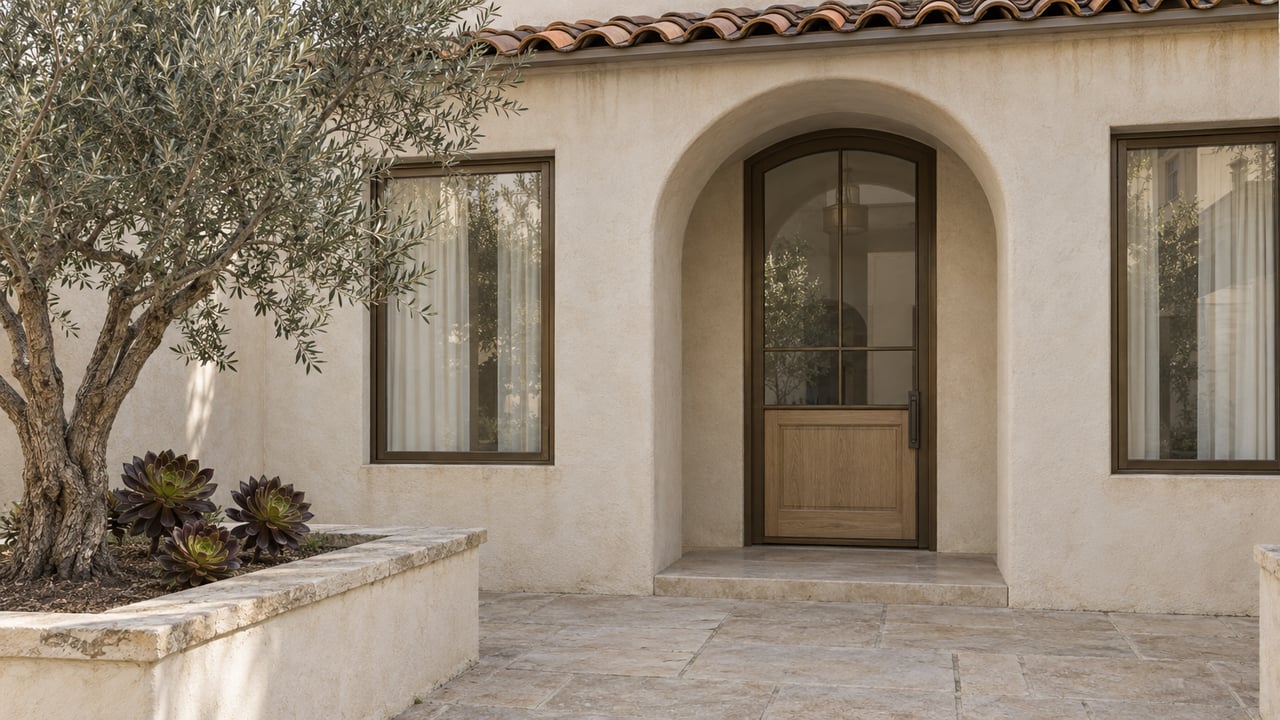
The tract covered 120 acres east of Atlantic Avenue, between Bixby Road and San Antonio Drive. The family hired the Deeble-Chapman Corporation to sell lots. Its principal, Roy E. Deeble, promised to "safeguard the entire tract from unsightly structures," adding that "rigid architectural control is being exercised over all buildings." An architectural jury reviewed the plans for every home. Deeble-Chapman built the first exhibition home at 4252 Lime Avenue, a seven-room, one-story Spanish-style house designed by Raymond Sites.
The plan ran into trouble almost immediately. Sales needed a push by September 1930, and only a few homes went up through 1931. Their styles ran from Monterey Colonial to English Tudor. After the 1933 Long Beach earthquake and the rebuilding that followed, Deeble-Chapman stopped selling lots.
Sales started again in August 1935, when the New Deal's FHA loan program arrived and lot prices were cut in half to $1,375. More than 30 homes were built over the next two years, each in its own architectural style. Kenneth S. Wing designed many of them, including his own house at 4320 Olive Avenue. Carson Street was the only part of the tract zoned for multi-unit housing, and its stylish apartment buildings went up as World War II was starting in 1941.
So the architect-designed core behind Bixby Knolls' reputation is a fairly small group of houses, and each one was approved plan by plan.
Long Beach Airport filled in the rest. The City of Long Beach's 2009 Historic Context Statement says the airport's location and size helped Douglas Aircraft choose Long Beach. Construction of the 242-acre plant started in November 1940 and finished in August 1942. At its 1943 peak, Douglas employed 41,602 people, and about 54 percent of them were women.
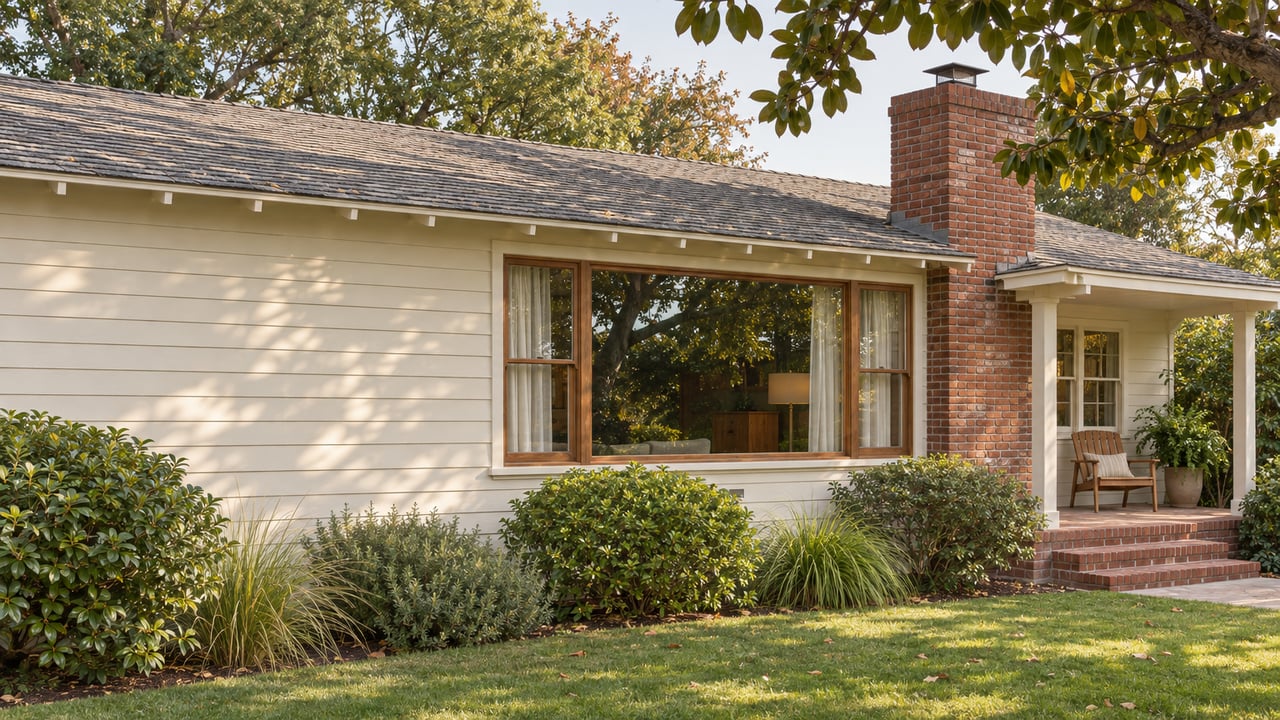
All those workers needed housing at a time when building materials were rationed. The City's context statement says wartime shortages pushed builders toward modest Minimal Traditional houses and early Ranch designs. According to the Press-Telegram's 2013 profile of 90807, Bixby Highlands, north of Carson Street and east of Orange Avenue, has three-bedroom houses on generously sized lots. Most were built between 1942 and 1944 to house wartime production workers at Douglas.
When the war ended, building kept going. The City's chronology says new subdivisions went up throughout Bixby Knolls after 1945.
Lloyd Whaley built a large share of those subdivisions. The Press-Telegram's Long Beach Landmarks profile reports that Whaley came to North Long Beach in 1935, founded Home Investment Co. in 1939, and sold more than 11,000 Long Beach homes in the 1940s and '50s. The same article puts his luxury lanai homes in Ridgewood Heights, north of San Antonio Drive between California and Cherry avenues.
Long Beach's Past, a local history blog, describes how Whaley built Country Club Manor, Ridgewood Heights and Ridgewood Manor on the rolling knolls east of Long Beach Boulevard and north of San Antonio Drive. Wartime limits on materials led him to give buyers a concrete garage foundation they could finish once the war was over. He later solved his own supply problem by opening the Whaley Lumber Company at Cherry Avenue and Artesia Boulevard.
Country Club Manor gives the clearest picture of what a postwar buyer got. The City's context statement dates the tract to 1949 and describes Ranch-style homes in two- and three-bedroom plans priced from $8,300 to $9,050. It also notes that postwar projects like this advertised large landscaped lots. The Long Beach's Past blog lists what came with a two-bedroom house: a fireplace, a double garage, landscaping, a dinette, a floor furnace and a wood-shingle roof. G.I. buyers needed no down payment, and loans were available at 4 percent.
Businesses followed. By the early 1950s, Atlantic Avenue had the Bixby Knolls Shopping Center, Ray and Eddie's Market, Welch's restaurant, and the Crest and Towne theatres. The association's history says the Bean Ranch had become "maybe not the Wilshire District but a modest approximation."
For a sense of scale, the median price of an existing single-family home in Los Angeles County was $994,670 in September 2026, according to the California Association of Realtors. At today's prices, most of what a buyer pays for in one of these houses is the lot and the work done since 1949, so those are the two things to check most carefully.
A Bixby Knolls listing with a 1930s build year inside the original tract is most likely one of those individually reviewed designs. Ask which original details survive, and ask for the permit history of each later update.
A build year of 1942 to 1944 north of Carson and east of Orange most likely means a wartime house, built with rationed materials on the generous lot the Press-Telegram described. The house is usually modest and the land is the asset. That makes these houses the natural candidates for a rear addition or a backyard unit, and our Long Beach ADU basics cover what that planning involves.
A 1949 build year in Country Club Manor tells you what the house had on its first day: a floor furnace and a wood-shingle roof. Ask when the heating system and the roof were replaced, and what replaced them. In any of the Whaley tracts, ask when the garage was finished. Some owners received only a foundation and built the garage themselves after the war, so it may date from a different year than the house.
The county market currently gives buyers some room to do this homework. In September 2026, Los Angeles County had 4.0 months of unsold inventory, up from 3.7 a year earlier, and the median home took 30 days to sell. County sales were down 10.9 percent from September 2025. At that pace, a buyer has a better chance of getting a contractor through a 1949 Ranch before committing. If you're still choosing between this area and the one next door, our California Heights or Bixby Knolls comparison and the Bixby Knolls neighborhood page cover the daily-life side. Our renovation budgeting guide for Long Beach buyers covers the cost side.
No. Bixby Hill is a gated subdivision in East Long Beach, just east of Cal State Long Beach and Rancho Los Alamitos, and most of its homes were built from 1966 to 1973. LB908's neighborhood-name history covers its origins.
The City of Long Beach's list of historic districts includes neighboring California Heights, with nearly 1,500 homes, but does not list a Bixby Knolls district. For what historic district status means for a remodel, see our post on ADU timelines in California Heights.
They're in the Virginia Country Club section of Los Cerritos. The course opened in 1920 and is lined with large homes on Virginia Country Club Drive and Virginia Road, according to the Press-Telegram's 90807 profile. Our Los Cerritos page has more.
If you're weighing a 1930s period revival against a 1949 Ranch in Bixby Knolls, Perry Handy Homes can walk the house with a licensed broker and general contractor. We'll check the roof, the heating system, the garage and how much room the lot leaves to expand, and put a number on each before you write an offer. Schedule your free home valuation & renovation consultation.
Stay up to date on the latest real estate trends.
Whether you're selling, buying, or renovating, Perry Handy Homes brings the expertise, resources, and care to help you succeed—start to finish.