How to Find Huntington Beach Fix and Flip Homes
May 7, 2026
May 7, 2026
If you are hunting for a flip in Huntington Beach, the biggest mistake is assuming every dated house is a good opportunity. In a market where the median sale price reached $1.35 million in March 2026 and buyers paid about $801 per square foot, your margin can disappear fast if you buy the wrong scope, miss a permit issue, or underestimate local review. The good news is that there are flip-friendly homes here if you know what to look for. Let’s dive in.
Huntington Beach can reward smart renovations, but it is not a forgiving market for sloppy underwriting. Redfin reported homes averaging about 33 days on market with roughly 4 offers, which tells you demand is there, but buyers still have time to compare quality, condition, and documentation.
That matters because in a higher-priced market, even a modest budget overrun can take a serious bite out of your profit. If you are planning to flip here, the safest path is usually a property with clear upside, a manageable renovation scope, and fewer permit surprises.
A flip-friendly home in Huntington Beach is usually one with solid bones, a workable layout, and cosmetic upside. You want the kind of property where updated finishes, better lighting, improved curb appeal, and smarter use of space can change buyer perception without forcing you into a major structural project.
This matters even more in a city where buyers are paying a premium per square foot. In this market, resale value is often tied not just to size, but to condition, layout efficiency, parking utility, and permit clarity.
The best candidates are often homes that feel tired rather than broken. Huntington Beach lists painting, tiling, carpeting, cabinets, countertops, and similar finish work among items that are generally permit-exempt, which makes light rehab easier to manage than projects driven by major framing or systems work.
That does not mean every cosmetic project is simple, but it does support a practical investment rule. If most of your value-add comes from finishes instead of structural changes, your timeline and risk profile are often easier to control.
A home with an already usable floor plan is usually a stronger flip candidate than one that needs walls moved or square footage added. Opening up flow, improving storage, and making rooms feel brighter can help resale, but major reconfiguration can bring more time, cost, and permit review.
In Huntington Beach, efficient living space tends to matter because buyers are paying so much for each foot of space. A home that lives well can compete better than one that is technically larger but awkward in layout.
Parking is not a side issue in Huntington Beach. The City’s circulation planning documents note ongoing parking pressure in Downtown, near the beach, and during special events, and they emphasize maintaining parking access within the coastal zone.
For a flip, that means garage usability, driveway function, and overall parking convenience can directly affect buyer interest. A clean remodel with weak parking utility may be less compelling than a similar home that handles everyday parking more smoothly.
Some homes look great on paper but become riskier once you dig into location, overlays, and permit history. In Huntington Beach, a property’s setting can affect your budget and timeline almost as much as the house itself.
Before you commit, you want to know whether the project is truly a light rehab or whether hidden review issues could slow everything down.
If a property sits in the coastal zone, the project may involve an extra layer of review. Huntington Beach notes that while some projects may receive ministerial review, development in the coastal zone may still require a Coastal Development Permit.
That is a big deal for flips that depend on additions, exterior changes, or ADU plans. A house that seems like a quick value-add can become a slower and more expensive project if coastal review enters the picture.
The City also notes that work otherwise considered permit-exempt may not be exempt if the property is in a Floodplain Overlay District, an Environmentally Sensitive Area, or subject to discretionary Planning Division approval. That means you cannot assume a standard cosmetic scope will stay simple on every parcel.
This is one reason parcel-level due diligence matters so much in Huntington Beach. Two homes with similar condition can have very different execution risk depending on where they sit.
Huntington Beach emergency and planning documents identify potential risks in parts of the city tied to flooding, tsunami, sea-level rise, erosion, liquefaction, and subsidence. The City specifically points to higher concerns in low-lying coastal areas and in places such as Huntington Harbour and areas south of the pier.
For a flip, this does not automatically rule out a property. It does mean buyers may ask harder questions about drainage, elevation, insurance, foundation performance, and long-term resilience when it is time to resell.
In Huntington Beach, the most dependable renovation strategy is usually the one that improves appearance and buyer confidence without creating major entitlement risk. In other words, think practical upgrades with visible impact.
That often means focusing on the rooms and features buyers notice first, while avoiding unnecessary complexity.
The most practical flip scopes here often include:
These improvements align well with what the City generally treats as finish-level work, and they support the kind of move-in-ready presentation that tends to perform well at resale.
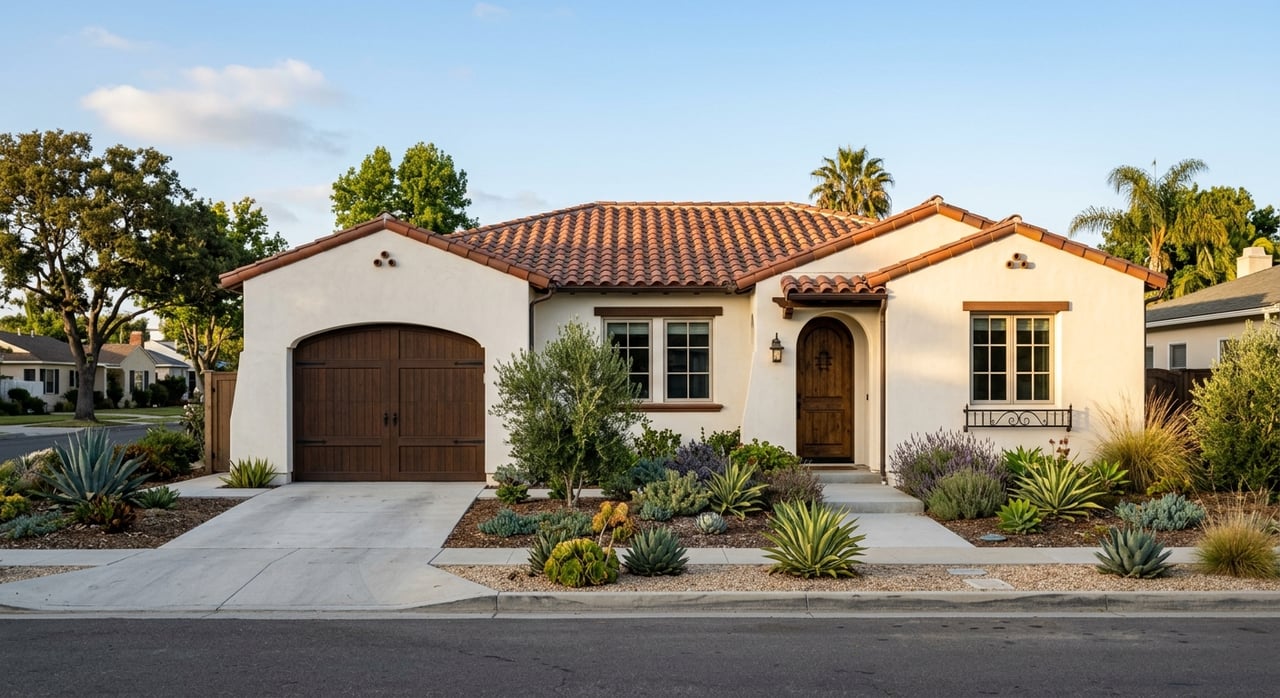
In some markets, investors can focus almost entirely on interiors. Huntington Beach is different. The City’s planning framework highlights coastal access, scenic corridors, and parking management, which suggests buyers notice how a home works from the street as much as how it photographs inside.
That is why exterior presentation, driveway usability, garage access, and simple day-to-day convenience deserve real attention in your flip budget. A polished exterior can reinforce the value of the whole project.
An ADU can improve a property’s appeal, but in Huntington Beach it should never be treated as automatic profit. The City’s ADU summary says one ADU up to 800 square feet and 16 feet high may be allowed with reduced 4-foot side and rear setbacks, but coastal-zone properties may still require a Coastal Development Permit.
That means ADU potential should be checked carefully on a parcel-by-parcel basis. Lot conditions, zoning, and coastal review can all affect whether the upside is realistic.
ADU potential can strengthen your buy decision when the lot already supports a clean path to future use and the main house flip still works without it. In that case, the ADU becomes bonus value rather than the only reason the deal pencils.
That is a safer mindset in a coastal market. If the flip only works because of a future ADU assumption, the margin may be too fragile.
One of the smartest things you can do before buying is review permit history. Huntington Beach’s online permit portal allows record searches, permit tracking, inspection requests, and application management, which makes it easier to verify whether prior additions, conversions, or repairs were properly documented.
This matters because unclear permit history can hurt both your renovation plan and your resale. Buyers in this price range often want confidence that the home’s upgrades and square footage are legitimate and properly handled.
Before you move forward on a Huntington Beach flip, ask:
If you can answer those questions early, you have a much better chance of protecting your margin.
The strongest flips in Huntington Beach are usually designed backward from the resale buyer. Instead of asking how much work you can do, ask what today’s buyer is most likely to reward.
In this market, the safest answer is often a clean, permitted, move-in-ready home with strong finish quality, good parking utility, and no confusion around upgrades or additions. Because homes are not selling instantly no matter what, execution still matters.
If you are considering a short-term rental angle, be careful. Huntington Beach’s short-term rental rules state that the City issues one STR permit per property, enforces local requirements, and only allows ADUs or JADUs as short-term rentals if they were legally established before the ordinance’s effective date. The City also notes that CC&Rs may block approval.
That makes a traditional resale plan more dependable for many flips. If the property works as a clean resale without an STR assumption, you are on firmer ground.
Finding the right flip in Huntington Beach is not just about spotting a dated kitchen. It is about understanding where cosmetic value-add ends and entitlement risk begins.
That is where a practical, renovation-minded approach can make a real difference. When you evaluate homes through the lens of permits, layout, parking, coastal review, and resale demand, you are far more likely to avoid expensive surprises and choose projects with realistic upside.
If you are looking at flip opportunities in Huntington Beach and want a grounded read on renovation scope, permit risk, and resale strategy, Perry Handy Homes can help you evaluate the opportunity with a practical, results-focused approach.
Stay up to date on the latest real estate trends.
Whether you're selling, buying, or renovating, Perry Handy Homes brings the expertise, resources, and care to help you succeed—start to finish.